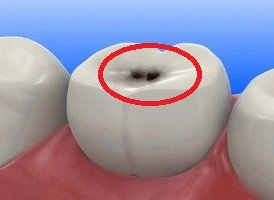

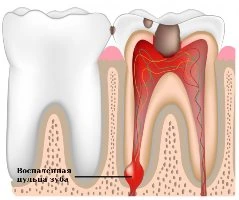
Pulpitis of the tooth is called the process of inflammation in the pulp, with the decay of the organic matter of the dentin and infection in the pulp. Pulpitis most often occurs due to the neglect of another dental disease – caries.
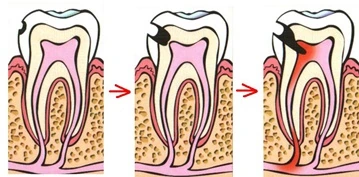
Therefore, they always try to cure caries in the initial stages of development in order to prevent pulpitis.
Symptoms of pulpitis
Acute pulpitis is manifested by “shooting” pain in the area of the affected tooth. Often, the pain gets worse at night. Attacks begin on their own, for no reason, and increased pain is associated with temperature changes in the oral cavity of cold and hot food. Often it is impossible to determine which of the teeth hurts, as the pain covers half of the jaw, and sometimes half of the face.
Chronic pulpitis is characterized by aching pains of unclear origin, and sometimes proceeds without symptoms, but the complications from chronic pulpitis are quite serious and are similar to the consequences of acute pulpitis.
Causes of pulpitis
Pulpitis primarily occurs when the form of caries is advanced, when the organic matter of the dentin decays and infection enters the pulp. Also, the disease can occur after taking strong drugs of the pharmacological group and mechanical damage to the teeth (injuries). The nerve of the tooth can also become inflamed from the increased temperature of the pulp (overheating of the neurovascular bundle). This can happen during the processing of tooth enamel for the installation of crowns, lumineers, veneers.
Types of pulpitis:
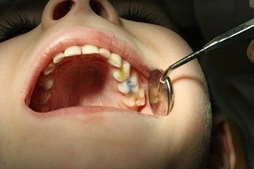
Pulpitis is divided into:
– Acute: focal, diffuse.
– Chronic: gangrenous, hypertrophic, fibrous
With an exacerbation of the disease, the following classification can be observed: acute, purulent and chronic pulpitis.
Pulpitis of acute forms:
Acute pulpitis is characterized by the occurrence inside the tooth, without external damage and deformation of the dental tissue. Pain in the acute form of this dental disease is expressed by increased sensitivity to all possible external stimuli. Kyiv recommends dental treatment only in specialized clinics, since the treatment of acute forms of pulpitis requires modern equipment in order to avoid re-inflammation of diseases.
Pulpitis acute (focal) – is the primary stage of the disease, characterized by periodic prolonged pain every 120-150 minutes. This type of pulpitis originates in the dental tissue, namely in its upper part.
Acute (diffuse) pulpitis is the next stage of the focal form of the disease. Usually the stages are replaced in 2-3 days. Toothache can also spread to the ears, nose, eyes, scales and back of the head. The onset of pain can be random and last for several hours. Especially at night, the pain intensifies several times.
Purulent pulpitis is characterized by acute and prolonged pain, usually accompanied by high body temperature.
Concremental pulpitis is characterized by constant sharp pain, giving off a pulsation in the trigeminal nerve. It occurs due to various injuries in the oral cavity and with an allergic reaction of tooth receptors to various drugs of the pharmacological group.
Chronic forms:
Chronic pulpitis is more common than acute forms of the disease, and it can be accompanied by exacerbations of various forms. Diagnosing the chronic forms of this disease, dentists first of all determine the history of the progression of pulpitis.
Chronic pulpitis (fibrous) is the most common form of the disease. Fibrous pulpitis is formed deep in the cavity, which is affected by caries. In this case, toothache is expressed by a sharp reaction to temperature changes in the oral cavity, that is, the use of cold and hot food.
Chronic pulpitis (hypertrophic) – is formed in the form of swelling of the tooth tissue. It can occur in the deformation areas of the tooth (holes, cracks) and it is difficult to visually notice it. Pain occurs when solid elements of food get on the inflamed area of the tooth.
Chronic gangrenous pulpitis is characterized by the main symptom – an unpleasant odor from the oral cavity. The disease manifests itself in the form of inflammatory processes of the nerves of the tooth. The disease can be formed in both open and closed dental cavity. At the moment in Ukraine they practice a modern solution to this problem, namely the sterilization method of dental treatment. Kyiv and its dentists treat gangrenous pulpitis by removing the inflamed pulp.
Pulpitis treatment
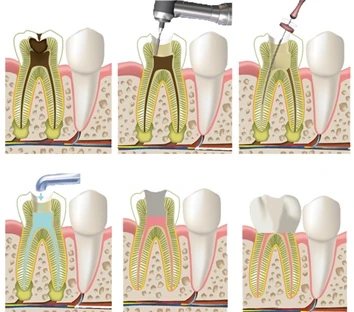
The main methods of treatment of pulpitis:
Conservative method – with this method of treatment of pulpitis, the viability of the pulp is preserved. This method is effective for young people and is used if pulp diseases are reversible – for example, traumatic pulpitis. The treatment is exactly the same as the treatment of caries. Particular attention is paid to the medical treatment of the affected cavity. For this, antiseptic drugs, antibiotics and proteolytic enzymes are used, with the exception of potent drugs, alcohol and ether.
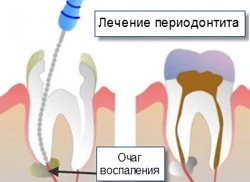
Surgical method – with this method of treatment, the inflamed pulp is removed, and the root canal of the tooth is filled with filling material.
With this method, pulp removal can be carried out in two ways:
Vital – indications for its use are all forms of pulpitis. The pulp is removed under general or local anesthesia.
Devital – when using this method, the removal of the pulp occurs after necrotization, that is, the killing of the nerve.
 Video: pulpitis treatment
Prevention of pulpitis
In order to avoid the occurrence of pulpitis, it is necessary to treat caries in a timely manner. To do this, it is necessary to carry out daily hygiene of the oral cavity and teeth:
- The use of anti-inflammatory and antibacterial mouth rinses (2 times a day – in the morning and at night after brushing your teeth).
- Rinsing the mouth with warm boiled water after each meal, as well as after drinking drinks.
- Brushing your teeth and tongue (in the morning after meals and in the evening before going to bed).
- Regular use of dental floss to clean the interdental spaces from food debris.
- Visiting a dentist for a physical examination at least 2 times a year.
- The use of foods containing calcium, fluorine, vitamin C in sufficient quantities (you can use vitamin-mineral complexes to ensure that the body receives the necessary nutrients).
A healthy smile is timely dental treatment. Kyiv today has located on its territory many specialized clinics of modern dentistry. Don’t leave solving problems for tomorrow, visit the dentist today.
Dentists in Kiev that treat pulpitis.