
What is periodontitis?
Periodontitis is an inflammation of the membrane of the root of the teeth and adjacent tissues.
 Video: What is periodontitis?
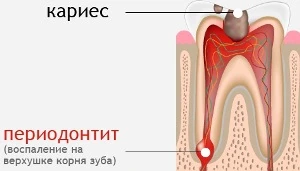
Periodontitis is a serious complication of advanced caries, in which tooth inflammation spreads to the bone tissue surrounding the root. This disease is accompanied not only by pain, but by high fever, weakness, therefore, it needs an urgent appeal to the dentist.
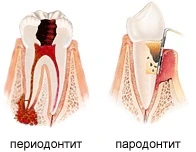
Periodontitis and periodontitis. What is the difference?
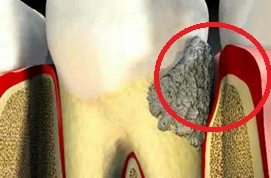
Periodontitis can be considered a consequence of periodontitis. In most cases, the gums are first affected, if proper treatment is not carried out, the inflammation goes down and affects the deep tissues around the tooth, which hold its root in the bone cell.
 Related article: periodontitis
Causes of periodontitis
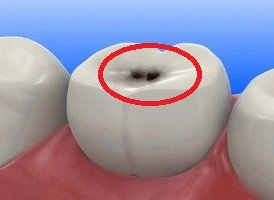
The cause of periodontitis is the penetration of pathogens into the dental canal from a cavity that has arisen due to a carious process or due to mechanical damage. From there, the inflammatory process passes to the tissues that are near the root, which is fraught with suppuration, which can lead to a deterioration in the general condition. As a rule, periodontitis occurs when an infection enters from the root canal through the hole at the top of the root and as a result of caries.
The main causes of periodontitis:
- insufficient oral hygiene
- mechanical damage
- complications of diseases of teeth and gums
- poor-quality dental treatment
- lack of vitamins
Symptoms of periodontitis
- Bleeding gums when brushing teeth
- Persistent bad breath
- Unpleasant sensations when eating, when the gums can ache with cold or hot food
- swollen gums
- Swollen cheek, irresistible pain
With the above symptoms, there may be: high fever, chills, headaches.

If these symptoms are found, it is important to contact a dental clinic in order to exclude the occurrence of irreversible consequences.
Classification of periodontitis:
- Downstream: acute or chronic;
- By origin: isolated drug-induced periodontitis, traumatic or infectious;
- By localization: marginal or apical.
Often the acute form of the disease occurs after poor-quality elimination of pulpitis or caries. The disease is divided into a purulent acute form of periodontitis and a serious acute form of periodontitis.
In severe periodontitis, the inflammatory process manifests itself in the form of a deeply opened carious cavity and a change in the color of the diseased tooth, and the patient is constantly worried about aching pain.
With purulent periodontitis, there is pus in the tissue that surrounds the root of the diseased tooth. Inflammation is accompanied by unbearable pain, poor health, high fever.
As for chronic periodontitis, it is fibrous, granulating and granulomatous.
Fibrous periodontitis is one of the milder forms of the disease, in which the patient practically does not feel pain. Symptoms include: fragility and discoloration of tooth enamel, loss of tooth shine.
Granulating periodontitis is an active form of the disease, accompanied by mild pain in the area of the damaged tooth, swelling of the gums. All this indicates the transition of inflammation to the bone tissue. Sometimes a fistula occurs on the gum.
Granulomatous periodontitis is accompanied by pain in the gums, discoloration of the tooth enamel. In the absence of treatment, the disease passes into the most serious stage – the development of a cyst.
Varieties of the disease by origin
- Arsenic periodontitis. Development is observed when arsenic enters the dental canal during the treatment of other dental diseases. The cause of inflammation can be drugs containing formalin and phenol.
- Infectious periodontitis. Occurs when pathogenic bacteria enter the periodontal tissue, which were provoked, for example, by caries or pulpitis.
- Traumatic periodontitis. The development of the disease is observed after receiving mechanical injuries, for example, due to improper use of dental floss, poor-quality crowns or fillings. Depending on the concentration of inflammation, there is marginal and apical periodontitis.
- Apical periodontitis. With such a disease, the periapical tissues of the root of the tooth are affected. The ligaments holding the tooth in the alveolus are broken. If left untreated, a tooth can be lost. The patient feels pain, headache, gums swell, tooth mobility is observed.
- Marginal periodontitis. With this periodontitis, the inflammatory process affects the marginal layer. Damage is accompanied by destruction of the ligament that holds the tooth, as well as bone tissue next to it. Symptoms include tooth mobility, acute pain, swelling, and the occurrence of a fistula is not excluded. With complications, you can lose a tooth.
Diagnosis of periodontitis
One of the main diagnostics of periodontitis is a visit to the dentist and an X-ray examination.

Treatment of periodontitis
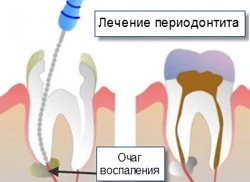
What does the treatment of periodontitis include?
- Local anesthesia (anesthesia).
- Access to the inflamed channel.
- Expansion of the tooth cavity.
- Providing access to the root.
- Probing, passage of the canal, often its unsealing.
- Measurement of the channel length.
- Mechanical and drug treatment of the canal.
- If necessary, removal of necrotic pulp.
- Setting up a temporary filling material.
- After a short period of time, the installation of a permanent seal.
- Restoration of the dentition, including the damaged tooth.
Prevention
Prevention of periodontitis is the timely treatment of teeth, namely caries and pulpitis. If possible, visit the dentist twice a year.
Dentists in Kiev that treat periodontitis.