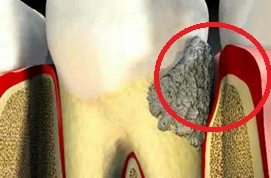

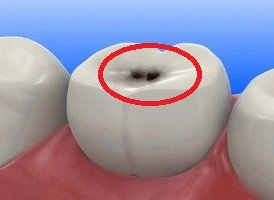
The appearance of caries is due to a change in the acid-base balance (pH), which corrodes the surface of the tooth, followed by calcium leaching and enamel destruction. Almost every person suffers from this dental disease.
In modern medical practice, there are several classifications of caries.
Classification of caries according to the primacy of development:
– The early stage is the beginning of the disease of a tooth that has not been treated before. The early stage of caries is a small external change in the enamel, a white or dark small spot appears.
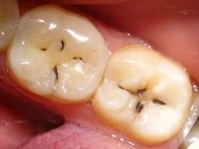
– Late stage – more severe stage of the disease. The affected areas become clearly visible, stained in a dark color. The late stage can affect tissues to different depths.
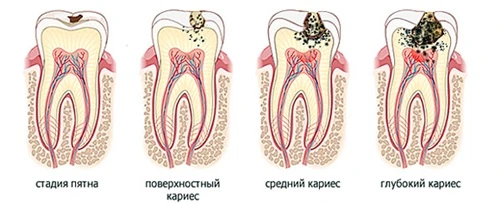
Classification of caries according to the depth of the lesion
Spot formation stage – early stages of caries development. The destruction of the enamel has not yet occurred. A white or dark spot appears on the surface of the tooth, the enamel is still smooth and intact. Most often, there is no toothache yet.
Superficial caries – the top layer of enamel is damaged, but the dentin has not yet been affected, it is characterized on the surface by the presence of a black defect. Periodic toothaches may appear, the tooth reacts to sour, sweet, spicy, hot-cold. Treatment is carried out by removing the affected area of the stain and filling the tooth.
Medium caries – enamel is affected and caries has reached the upper layer of dentin. There are periodic or constant intense pain. Average dental caries photos very well characterize this stage of the development of the disease. Treatment is carried out by removing the damaged area and establishing a seal.
Deep caries is a deep damage to the tooth, only a thin layer of the dentin layer that has not yet been destroyed is preserved near the pulp. Treatment is carried out by removing the damaged area and installing a filling, if not treated on time, the disease will continue and progress, which will lead to pulp damage, such a disease is characterized as pulpitis.
Types of caries
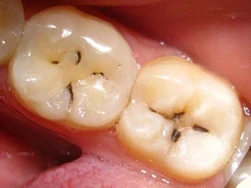
fissure caries
Affects chewing teeth. After a meal, food particles linger in the recesses of the tooth, which contributes to the development of caries.
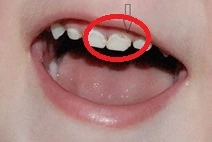
bottle caries
It is observed in children with milk teeth. The disease progresses rapidly, drawing the pulp into the process. It is fraught with many complications.
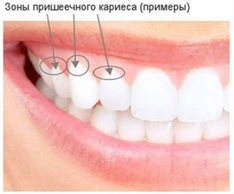
Cervical caries
The neck of the tooth, located near the gum, is affected. The occurrence of this form of the disease is facilitated by the physiological structure of the enamel of this area and the inaccessibility for oral hygiene.
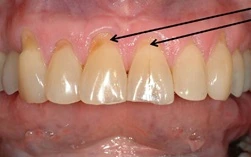
Radical caries
Is the most common. It has a particularly sharp course.
In this case, there is a lesion at the very root of the tooth. The patient may feel constant severe pain, as well as pain reactions to external stimuli (sweet, hot, cold).
 Related article: Who treats dental caries?
caries of wisdom teeth
Very often, the patient is faced with the question: what to do if caries occurs on the wisdom tooth? Should the tooth be treated or should it be removed? This issue needs to be addressed in each case individually, everything will depend on many reasons, so only a dentist can tell you what to do in a given situation.
Reasons for the development of caries
To effectively deal with this common pathology, you need to know what causes it to develop. Causes and contributing factors are:
- insufficiently careful oral hygiene (food remains in the oral cavity)
- malnutrition (the predominance of food containing sugar, lack of vitamins, lack of raw vegetables and fruits in the diet)
3. hereditary predisposition;
4. weak immunity of the body;
5. smoking;
6. irregular visits to the dentist;
7. taking medications that can disrupt the normal microflora of the oral cavity.
Enamel and dentin of the tooth are destroyed due to the action of naturally occurring acids on them. If pieces of food linger in the oral cavity, saliva enzymes begin to break them down. Thus, organic acids appear that adversely affect the tissues of the tooth.
Diagnosis of caries
Qualitative diagnostics with the help of modern technologies is used in order to conduct timely dental treatment.
The examination is painless, the treatment will also not cause discomfort, as it is carried out under local anesthesia and with the use of modern equipment and instruments.
caries treatment process
1. Local anesthesia.
- Turning the tooth with the removal of all softened and pigmented tooth tissues. With the help of dental instruments, the carious cavity is cleaned until the bottom and walls become light and smooth.
- The cavity is thoroughly dried and disinfected.
- The bottom of the cavity is treated with fluorine-containing preparations to prevent the recurrence of caries.
- A therapeutic pad (a drug with a therapeutic effect for restoring dentin) and an insulating pad (a drug for isolating the filling and preventing its harmful effects on the tooth) are applied.
- The next stage is the filling of the carious cavity. First, all the walls and the bottom are covered with a special glue for fillings, which is called “adhesive”, then the process of filling the cavity with a filling takes place.
- Finishing touches – correction (removal of excess material with boron), grinding and polishing of the seal.
If a light-curing filling was used for filling, then the tooth may become more sensitive for a while, but after a week the discomfort should go away by itself.
 Video: Treatment of caries
Prevention and prevention of caries disease
First of all, the basis for the prevention of caries is:
- proper nutrition
- hygienic care of the oral cavity (mandatory use of dental floss)
- regular visits to the dentist (2 times a year).

Oral hygiene includes brushing your teeth for 3-5 minutes 2 times a day (after breakfast and after dinner) followed by the use of mouth rinses. It is also recommended to have professional teeth cleaning at the dentist 1-2 times a year. The dentist can also perform a fissure sealant. Fissures are the chewing surfaces of the back teeth, consisting of grooves and grooves, for this reason they are poorly cleaned and are most susceptible to caries. These grooves are filled with a special sealing material, as a result of which the chewing surface of the tooth becomes smoother and protected from caries.
Search for dentistry in Kyiv by service: dental treatment
See also: Kyiv clinics offering «Tooth filling».
Clinics offering this service
Dental clinic

Dental clinic

Kyiv, st. Goloseevskaya, 13.