
Children’s dentist and his responsibility
Pediatric dentists require special responsibility in their work. For the most part, children’s dental problems are much easier to prevent while the teeth are still milk, than to start treating already advanced problems with molars. Excessive pain during teething, the development of caries on milk teeth, various inflammatory processes and other equally capacious health problems in children’s teeth should be treated by a professional dentist.
A pediatric dentist helps not only to effectively solve a particular problem, but also to approach the solution of this problem, taking into account all the features of pediatric medicine.
What does a pediatric dentist do?
A pediatric dentist is engaged in the diagnosis, treatment and prevention of oral diseases in children. The main diseases of the oral cavity in children are: inflammatory diseases of the gums and mucous membranes, caries, difficult and painful teething, malocclusion, loose teeth.
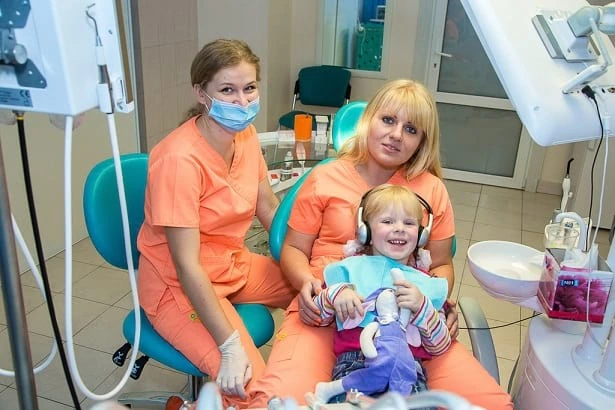
Another important criterion is the psychological preparation of the child for the procedure.
It is necessary to contact a pediatric dentist not only in connection with the illness of your baby, but also to conduct a periodic preventive examination.
What diseases does a pediatric dentist treat?
- Caries of milk teeth
- Removal of milk teeth
- Wrong bite
- Pulpitis
- Stomatitis
- Gingivitis
- Periodontitis
- Inflammation of the periosteum
When should you visit a pediatric dentist?
As in any medical field, in pediatric dentistry, the help of a specialist may be needed on an emergency basis. It is worth paying close attention to any complaints about the teeth that the child expresses. Dental treatment urgently needed when:
- getting injured, when it is much easier to restore a tooth than to remove it
- toothache caused by caries, inflammation and other causes
- high temperature, which is a consequence of inflammation of the gums, etc.
Any problems with the health of children’s teeth require urgent intervention by a professional who can effectively and painlessly eliminate the problem.
Types of diseases in pediatric dentistry:
It is a misconception that milk teeth in children rarely require treatment. Many dental health problems in adulthood begin in childhood. So, the most common problems in pediatric dentistry are:
Caries:
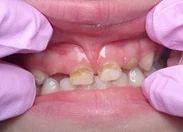
This is an infectious disease due to which, under the influence of acid-forming bacteria, tooth enamel is destroyed. Often, children’s caries begins to develop even during the period of intrauterine development of the fetus at the stage of the first trimester of pregnancy. Also, do not forget about the negative impact on the teeth of sweets and other favorite children’s delicacies.
Pulpitis:
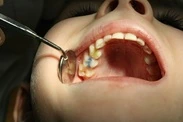
This disease consists in the development of an inflammatory process in the tissues of the pulp. Pulpitis is characteristic of both milk and molars. The main cause of the development of pulpitis is caries.
Periodontitis:
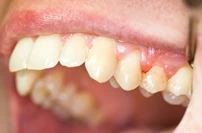
The disease is an inflammatory process in the dentary caused by bacteria. Periodontitis is also caused by caries.
Malocclusion:
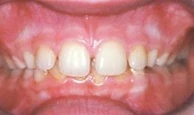
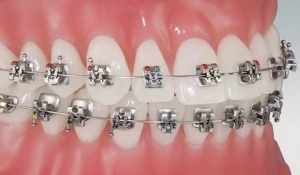
It is advisable to start correcting the bite from the earliest possible age, until the bones are fully formed, and dental treatment is most effective. Children at an early age easily tolerate the wearing of trainers, braces, plates and other orthodontic appliances.
Gingivitis:
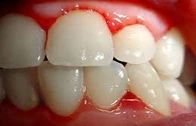
With this disease, bleeding and inflammation of the gum tissue is observed. Timely treatment of gingivitis will allow you to quickly cope with this problem and prevent the development of any diseases.
Stomatitis:
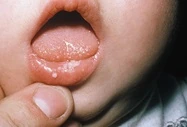
This disease is a viral lesion of the oral mucosa.
In addition to the treatment of the above diseases, the most popular services of a pediatric dentist are the silvering of milk teeth and their removal.
Types of oral diagnostics by a pediatric dentist:
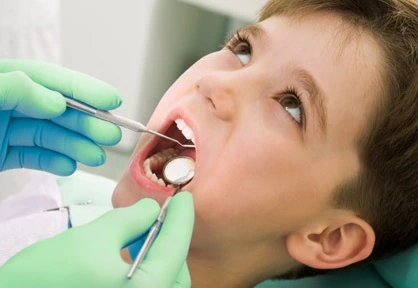
- External examination – the use of a dental mirror and a probe makes it easy to find and diagnose carious cavities.
- Drying – caries at the initial stage is often invisible under a layer of saliva. Sometimes, to identify it, it is enough just to dry the tooth and isolate it with tampons.
- Vital staining – after drying and isolating with swabs, a small amount of 2% methylene blue dye solution is applied to the tooth. After 3 minutes, the remains of the dye are washed off. At the same time, healthy enamel practically acquires its original color. Affected areas remain blue. Vital staining allows you to detect caries at the stain stage, when the lesion is not yet visible visually.
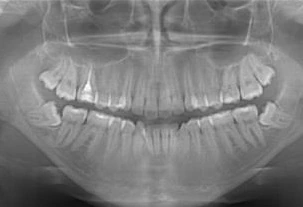
- Radiography – X-ray examination can reveal hidden forms of caries, when the defect is not visible from the outside, and a carious cavity is determined inside the tooth.
- Transillumination – for examination, dentists use bright light. Photopolymerization lamps are usually used. During transillumination, carious cavities and cracks become clearly visible as dark spots on white enamel.
- Laser diagnostics – used to identify the initial stages of caries, its hidden forms. The diagnostic apparatus emits a laser beam, which changes its properties when reflected from the carious cavity. The doctor learns about it with the help of a special sound signal.
Laser diagnostics of caries is characterized by high accuracy and efficiency. Due to its high safety, it can be used in childhood. - Electroodontometry – a study of pain sensitivity of the tooth using a weak electric current. When exposed to current on healthy dental tissues, no discomfort occurs, and when exposed to a carious cavity, the patient notes pain.
- Fluorescent stomatoscopy – in a darkened room, ultraviolet radiation is directed to the teeth. At the same time, healthy areas of enamel begin to glow in a bluish color. Dark defects are revealed in the area of carious cavities.
Features of pediatric dentistry :
- Diagnostic methods. To diagnose dental health problems in children, a radiovisiograph or orthopantomograph is used, while an ordinary x-ray machine is used to examine adult patients.
- Therapeutic techniques. A pediatric dentist in most cases does not use a drill, which reduces the physical and psychological stress on the child’s body.
- Application of anesthesia. In pediatric dentistry, local anesthesia is predominantly used. Before starting treatment, the treated area is lubricated with a special anesthetic gel. An injection for pain relief is also used, administered using a special device. If a child is very afraid of dentist procedures, dental treatment is now performed in children under general anesthesia.
Tips from a pediatric dentist:
The eruption of the first teeth, which the parents of babies are waiting for, may not be as cloudless and easy an event as we would like.
The first milk tooth usually appears between the 6th and 8th month of a baby’s life, although in current children the process may begin earlier, and the formation of a milk bite ends by 2.5-3 years. A few weeks before teething, salivation may increase, and the child will begin to drag all soft objects into his mouth and gnaw.
This is a signal to take a closer look at his lower gum: the frontal incisors of the lower jaw (lower front teeth) usually appear first. Over the next 4-8 weeks, as a rule, the four upper incisors (both frontal and lateral) erupt. And only a month after them – two lower lateral incisors.
Chewing lateral teeth will appear next: first the most distant, then the penultimate. And by the second birthday, fangs will finally erupt, so a two-year-old child usually has a set of 20 teeth – the so-called milk bite. These standards are approximate. A deviation from them by 1-2 months is not considered a pathology, but it is still worth showing the baby to the dentist a year.
 Graphic structure of teeth here:
https://101stomatolog.com.ua/interesnoe/zuby-rebenka.html
Sometimes it happens that a baby is born with one or two teeth (intrauterine development of teeth), if they do not interfere with feeding and do not stagger, then there is nothing to worry about. In any case, you can ask questions to the local pediatrician or dentist.
Very often, the eruption of milk teeth is accompanied by a bad mood, whims, a desire to gnaw everything, possibly an increase in temperature, a change in the consistency of the stool, irritability, refusal to eat and poor sleep. In principle, teething is a natural physiological process that should not cause painful reactions. But in weakened children, it can cause a decrease in the body’s defenses, then teething will cause discomfort in the baby. If your child’s reactions are causing you concern, check with your pediatrician, as very high fever or diarrhea (diarrhea) may be due to other causes.
How to relieve pain in a child at the time of teething?
- Wipe saliva with a soft cloth to avoid irritation on the face
- let the baby chew on something soft, after making sure that it cannot be swallowed or chewed
- you can massage your gums with your fingers
- you can give paracetamol in children’s dosage if the baby does not feel well.
But in any case, you need to see a doctor for an examination!
Search for dentistry in Kiev by service: pediatric dentistry
Search for a dentist in Kiev: pediatric dentist
Clinics offering this service

Kyiv, st. Dnieper embankment, 25.
Dental clinic