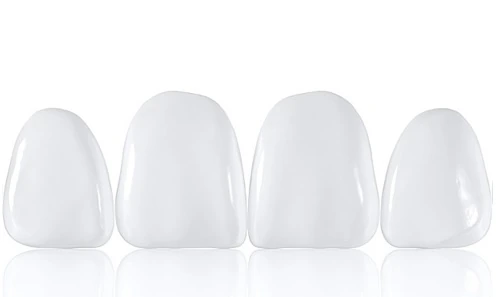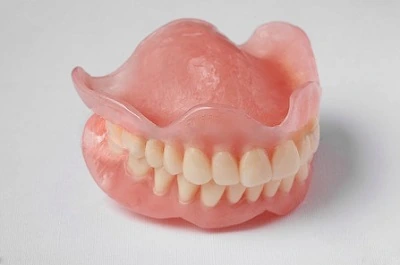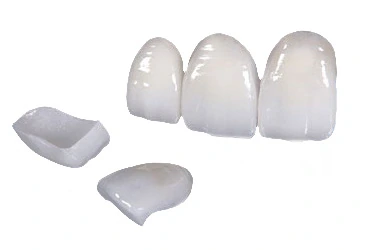

Dental implantation is the placement of an implant in the jawbone.
A little about the implant
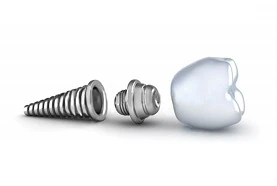
The implant is made of high-quality medical titanium with a diameter of up to 5 mm, in shape it is a structure of the tooth root, which is implanted into the jaw part of the bone tissue, the alveoli (tooth sockets).
The delivered implant completely replaces the functionality of the tooth.
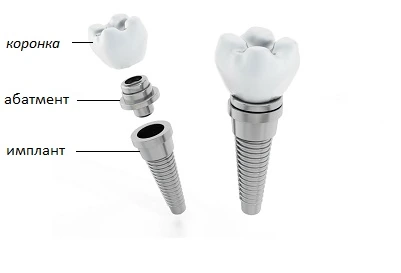
Dental implants include
1. surgical stage (screwing the implant into the jaw bone tissue).
2. orthopedic stage (prosthetics with single crowns, bridges or conditionally removable dentures).
When are implants placed?
- in case of loss or absence of a tooth
- when replacing a bridge prosthesis. When installing bridges and prostheses, neighboring teeth need to be turned, this leads to a decrease in the strength of the teeth, during implantation this need is eliminated, which keeps the teeth intact and healthy.
Benefits of dental implants
- Aesthetics, practicality, beauty. An implant tooth looks just like your own.
- Implantation is the most durable and reliable type of prosthetics in dentistry.
- The ability to save adjacent teeth, since there is no need to grind healthy teeth that are nearby.
- Implants serve as a support for bridges and clasp prostheses.
- When implants are installed, the chewing process is more efficient, which leads to an improvement in the functioning of the gastrointestinal tract.
- The implant protects and reduces the destruction and atrophy of the jaw bone, due to the correct distribution of the chewing load on the adjacent teeth.
- By installing implants, you can refuse removable prosthetics in the absence of teeth.
- Implants make it possible to prosthetics of any comfortable removable and non-removable prostheses, providing them with a secure fixation. In addition, it is much easier to get used to a removable denture on implants, since its borders are much smaller and do not feel like a foreign body in the mouth.
Contraindications for dental implants
- Diabetes mellitus of the first type.
- Serious disorders of the immune, nervous, cardiovascular systems.
- Infectious diseases: HIV, AIDS, tuberculosis.
- Malignant tumors of any organs.
- Bruxism – Implantation with bruxism is possible, provided that you put special mouth guards on your teeth before going to bed, but few people can fall asleep with mouthguards in their mouths.
Main types of installation
Classic – the most common type of implantation.
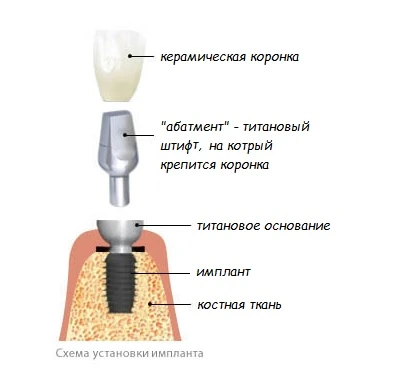
The peculiarity in the installation is the most natural way, that is, the introduction of the implant into the bone tissue. With this implantation, the alveolar process must have a certain size. If it is not enough, then the bone tissue builds up. With such implantation, root-shaped implants are most often used, less often and in special cases, lamellar, or a combined form.
Installation process:
- After the implant has been implanted into the bone, you need to wait 3-6 months for the implant to fuse with the bone. If you still need to increase the bone, then it will increase by 3-6 months.
- When the implant has fused with the bone, the mucosa is cut and the gum former is screwed into the implant, this is done to create a beautiful outline of the gum around the implant and the crown on it. On average, it takes 2 weeks to form a contour.
- After that, the abutment is installed.
- Together with the abutment, an impression is made on which a crown will be made in the dental laboratory.
- Then the crown is fixed on the abutment.
A laser may be used instead of a scalpel to make it easier to cut the gums. In terms of duration, such implantation is shorter, not so painful, almost bloodless, and additionally has an antibacterial effect. Another plus is the absence of a surgical suture, which leads to more efficient and faster wound healing.
 Video on the topic: How does dental implantation work?
Basal implantation
Marketing names one-step or express installation.
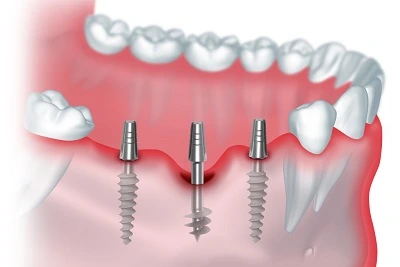
For this installation, a special implant is used. It is installed in the basal bone, which is deeper, practically not subject to atrophy and has a significantly higher density; with the classical method, the implant is installed in the cancellous bone of the alveolar process of the jaws.
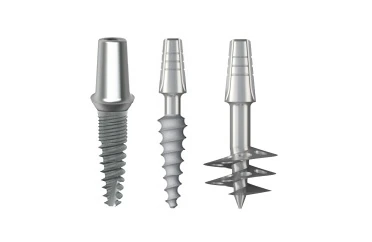
One-stage installation – this intraosseous implantation is carried out without incisions and sutures.
Installation process:
- The process of installing the implant takes only 15 minutes, the specialist, without cutting the gums, makes a hole in the bone with drills and screws the implant into it, after installation, suturing and any special care are not required.
- 3-5 days after the operation, you can install an acrylic (plastic) prosthesis.
- After 6-12 months, the acrylic prosthesis is replaced with a ceramic-metal one.
Advantages of basal (one-stage) implantation
- The speed of restoration of teeth, even immediately after tooth extraction;
- Absence of 3 or more consecutive teeth;
- Partial or complete loss of teeth;
- Replacement of clasp and bridge prostheses due to the destruction of supporting teeth;
- Installation for periodontitis and periodontal disease;
- When there are problems with bone tissue: a decrease in its volume after tooth loss;
- Impossibility or unwillingness to carry out jaw bone augmentation in 90%;
- The cost is 2 times lower than classical implantation when restoring the entire jaw;
But it is important to understand that this option of implantation has a number of contraindications, so it is not suitable for every patient. The main contraindications are described below. Also, contraindications for each individual can be explained to you only by your treating dentist-implantologist.
Cons of basal implantation
The main disadvantages of basal implantation include:
- The procedure is not performed when replacing the 1st or 2nd teeth;
- Aesthetics is low at first, since first, up to the 1st year, an acrylic (plastic) prosthesis is installed on a metal frame, the plastic wears out over time and changes color (it is darker), therefore, after a year, a ceramic-metal prosthesis is installed.
- The need to manufacture 2 prostheses – first a metal-plastic one, and then after 6-12 months the installation of a metal-ceramic prosthesis.
- While the maximum service life of implants is unknown, because there are no such long-term clinical observations. In classical implantation, observations are 30–40 years old.
- Few qualified specialists.
These are all the significant disadvantages of basal implantation, but it is worth noting that dentistry is constantly developing and improving.
It is also worth noting that none of the implant installation methods, classical or basal, are advantageous, they are the choice of the patient in a particular situation.
To determine the optimal type of implantation, contact the specialists who, taking into account the condition of your oral cavity and focusing on their own experience, will help determine the most suitable method of dental implantation.
Complications after dental implants
1. After the operation:
- bleeding
- pain
- edema
- inflammation in the maxillary soft tissues
- hematomas
- divergence of seams
2. Complications at the stage of implant engraftment:
2.1 Implant rejection.
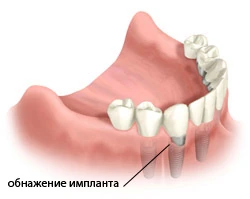
If the mobility of the implant occurred before the moment of prosthetics, this is due to the reaction of the body itself to a foreign object, it may also be an implantologist’s mistake when installing with overheating of the bone tissue during the operation.
If rejection appeared after prosthetics, when the implants began to experience chewing load, then this is a signal of mistakes made by the orthopedic dentist during prosthetics.
2.2. Bone atrophy around the implant.
Loss of bone level around the implant of more than 1.0 mm in the first year after implantation and more than 0.2 mm per year starting from the second year is clearly regarded as unsuccessful implantation.
2.3 Peri-implantitis.
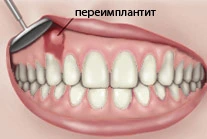
Inflammatory disease of the mucous membrane or bone around the implant, which leads to loss of bone tissue around the implant and implant rejection. The reasons for the peri-implant may be associated with medical errors during the procedure.
When to place implants by classical or basal process?
Only one tooth is missing
Basal implantation in most cases is not used to restore a single missing tooth. Therefore, in such a situation, classical implantation is used. But! In some cases, when the lateral teeth do not carry a large load, single implants are still made, replacing single-rooted teeth.
Missing front teeth
When installing the front teeth, classical implantation is used, since with classical implantation the gum contour looks more aesthetic.
Several chewing teeth are missing
This is for basal implantation. Which implants to put, basal, compression type implants or their combination, it is up to the surgeon-implantologist to decide.
Complete absence of teeth
In the complete absence of teeth, if you want to abandon standard removable dentures without locks, which can fly off when talking, basal implants are what you need. The connection of the prosthesis with the implant is carried out with the help of a lock, it is easy to remove them, as your implantologist will teach you how to remove the prostheses.
Recommendations after dental implants
- It is necessary to follow the recommendations of doctors regarding nutrition and oral hygiene.
- You can eat food, but after the effect of anesthesia has passed, it is advisable to refrain from food for some time.

- You can not eat solid foods, spicy and too hot dishes.
- It is necessary to refrain from alcohol and smoking.
- After the operation, try to avoid physical, nervous or any other stress, keep calm.
- Teeth can be cleaned with a soft brush and carefully so as not to injure the wound.
- Rinse with solutions or herbal tincture that the doctor will recommend.
- If you have bleeding, severe pain, or swelling, contact your doctor and describe your symptoms.
Dentists who perform dental implants in Kyiv
Clinics offering this service
Dental clinic
Kyiv, str. Dzhokhara Dudayeva, 1.
Dental clinic
Kyiv, st. Heroes of the Dnieper, 32a.