
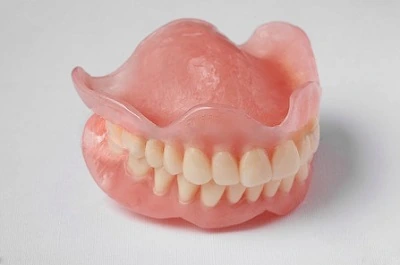
Dental prosthetics is considered to be one of the most famous and widespread services in the field of dentistry today. Prosthetics is divided into 2 types, the use of each of which makes it possible to restore the function, shape and structure of the teeth.
Types of prosthetics
1. Removable prosthetics.
It consists in the manufacture of a prosthesis, which is used to restore most of the patient’s missing teeth, most often the upper or lower jaw and is divided into categories:
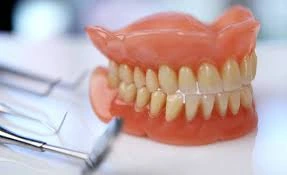
– complete removable dentures, are used in case of loss of all teeth of the upper or lower jaw;
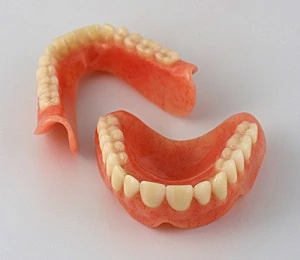
– partial removable dentures, used for both temporary and permanent use, are used for the loss of individual teeth, mainly chewing.
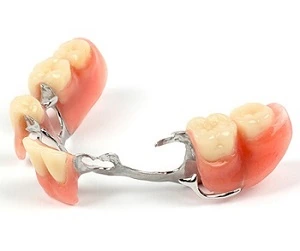
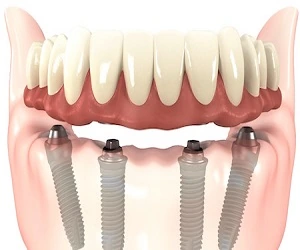
– conditionally removable dentures, fixed by the implant, removed with the help of a dentist.
2. Fixed prosthetics.
With fixed prosthetics, the following prosthetic options are used:
- tabs
- crowns
- veneers
- lumineers
- bridge prostheses
- dental implantation
Let’s talk about each type of prosthetics in more depth.
Removable prosthetic method
If you are missing several teeth or there are defects in the dentition with a large extent, then you should resort to the use of dental prosthetics. Often, this type means prosthetics for pensioners, since older people have a large number of missing teeth. Sometimes, with this type of prosthetics, healthy lateral teeth are not turned. The main feature of removable prosthetics is the need for regular removal of the prosthesis for special treatment (usually once a day).
Often, patients respond to removable prosthetics somewhat worse than fixed prosthetics, which is explained by the fact that such prostheses take up more space in the oral cavity due to the rather large base (base).
Removable dentures options
– Plastic dentures – made of acrylic. This type of prosthesis is used for both complete and partial absence of teeth.
- Clasp prostheses. Removable prostheses based on a metal arc. This type of prosthesis is used only in the partial absence of teeth (there can be both a lock and a clasp fixation system). Today, such prostheses are considered to be the most modern when performing prosthetics for the partial absence of teeth, since due to the metal arc, the size of the plastic base is reduced, which makes the structure not so massive.
- Nylon prostheses – made of nylon, therefore they are elastic. As well as plastic prostheses, nylon, can be used both in the case of complete and partial absence of teeth. This method has serious drawbacks, which may have numerous complaints from patients.
Fixed method of prosthetics
The use of fixed prostheses is appropriate for filling the dentition, where one or two teeth are missing, or there is an increased abrasion of dental tissue, tooth decay from caries, as well as when you need to change the color of the teeth or give them a new shape.
Types of prostheses:
– Artificial crown. It is a denture that restores the shape of the tooth, as well as its color and all the functions of a physiological type (speech, chewing, etc.). To date, artificial crowns are divided into 3 types: metal-ceramic or ceramic, as well as cast (an alloy of cobalt and chromium).
– Bridge prostheses. It consists of several crowns that are interconnected and are intended to replace missing teeth. The fixation of the extreme crowns in this type of prosthesis occurs on the abutment teeth, which are turned under the crowns. This type of prosthesis, as a rule, is used if there are defects in the dentition no more than 1-2 teeth in a row.
– Tabs. They are micro prostheses used to restore chewing teeth. The material for the manufacture of such prostheses is made from an alloy of cobalt and chromium, ceramics and gold.
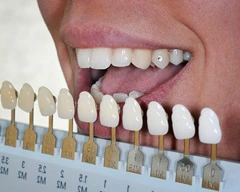
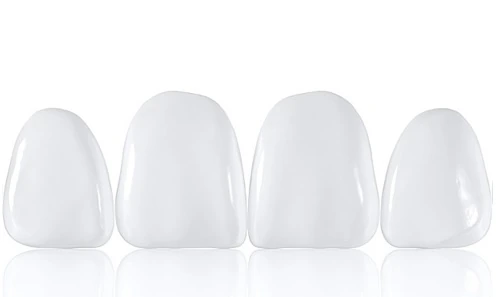
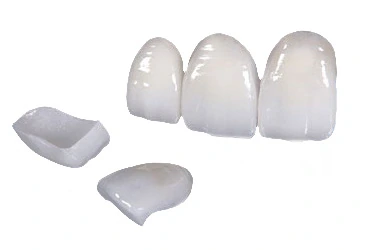
– Veneers and Lumineers. Micro prostheses used to restore the color and shape of the front teeth, as well as to create an irresistible smile.
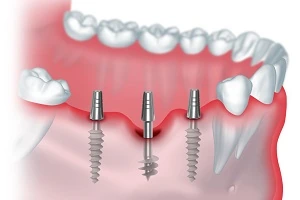
– Implantation of teeth. A type of prosthetics that involves the installation of prostheses using special pins (implants) implanted into the jaw bone tissue. If we talk about the implant, then it imitates the natural anatomical tooth root, which serves as the basis for the construction of an artificial tooth. After some time, the pin and jaw tissue grow together, which serves to ensure its reliable and stable fixation.
The materials from which dentures are often made:
- Alloy of gold and palladium
- Alloy of cobalt and chromium
- Ceramics (porcelain, zirconium dioxide)
- Metal-ceramics (frameworks, which are made of various metal alloys, coated on the basis of ceramics).
Fixed prosthetics and main features:
- By design, the prosthesis is permanent. The denture can only be removed by a dentist.
- The chewing load is distributed only on the teeth to which the prosthesis is attached. A distinctive feature of a fixed prosthesis, unlike a removable prosthesis, is the fact that the load is not distributed on the gum.
Dentists that carry out prosthetics in Kiev
Clinics offering this service
Dental clinic
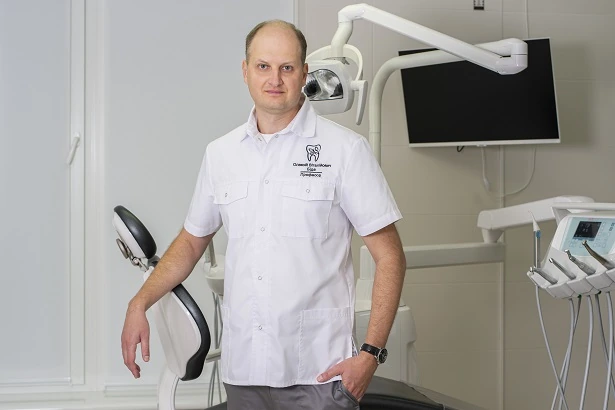
Kyiv, st. Dniprovska embankment, 18B, residential complex SEVEN.
Kyiv, Vasylkivska, 18.