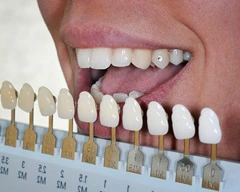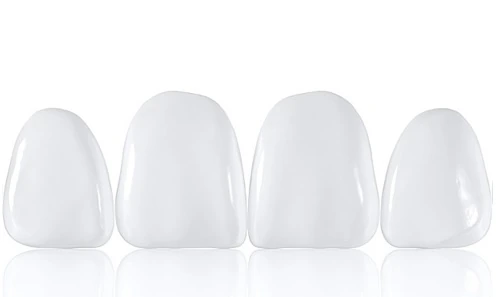

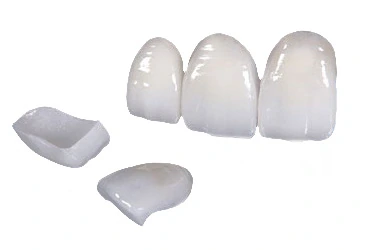
Veneers are the thinnest plates that are installed on the surface of the front teeth. With the help of such plates, the problem of aesthetics of the teeth is eliminated. They also help to hide defects and correct the shape of uneven teeth.
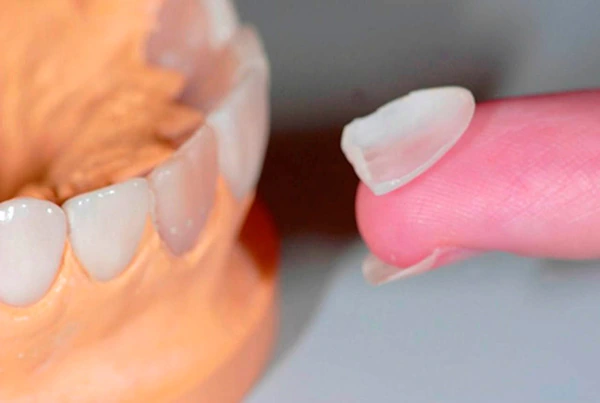
Types of veneers
There are such types of veneers:
1. Ceramic (porcelain) veneers. When installing ceramic veneers, teeth are prepared (turned), after which an impression is made, on the basis of which a ceramic veneer is created and polished. Then the design is installed on the surface of the tooth. During the manufacture of the veneer construction, temporary overlays are installed on the turned teeth.
2. Composite veneers – installed directly on the teeth. For this, materials are used that are similar to those intended for the manufacture of seals. The doctor grinds the tooth surface, after which he installs the plate, finishing the procedure with polishing.
3. Zirconium veneers. Super strong but expensive veneers due to the complex processing process.
4. Glass-ceramic veneers. During installation, no grinding of the tooth is required. In terms of aesthetics and functional qualities, surpassing ceramic ones.
5. Lumineers or as they are also called Hollywood veneers. Do not exceed the thickness of 0.3 mm. During installation, no grinding of the tooth is required. Create a whiter smile.
When are veneers placed?
Veneers are installed under the following conditions:
- yellow teeth by nature
- chipped front tooth
- discoloration of the tooth after pulp removal
- erosion of tooth enamel
- defects of teeth
- the gap between the teeth
- slight curvature of the teeth
- getting a Hollywood smile.
Contraindications for installing veneers
You should not put veneers if:
- increased risk of injury to the front teeth (extreme sports)
- bad habits (eating seeds with front teeth, biting nails, cracking nuts, etc.)
- bruxism
- the presence of a filling on the inside of the tooth
- the presence of a destroyed tooth on the inside
- increased abrasion of teeth
- the absence of more than five chewing teeth.
Ceramic veneers – advantages and disadvantages
- natural appearance of teeth
- service life up to 15 years
- do not darken from coffee and cigarettes
- installation in several stages
- require teeth grinding
- high price
Composite veneers – advantages and disadvantages
- turning is not required
- darken over time
- service life up to 5 years
- installed in one visit
- more fragile than ceramic
- inexpensive price.
However, composite veneers offer remarkable results in issues such as chipping. Another advantage of composite veneers is the ease of correction.
The cost of veneers
As a rule, the prices for veneers depend on the material as well as the technology. When compared between ceramic and composite, ceramic veneers are more expensive. However, the high cost of veneers is justified by the excellent result of the work. At the same time, it is these plates that allow you to accurately recreate the shade, as well as the transparency of natural enamel.
Composite veneers are a more affordable option for reconstructing teeth. The price is affected by the number of teeth in need of restoration.
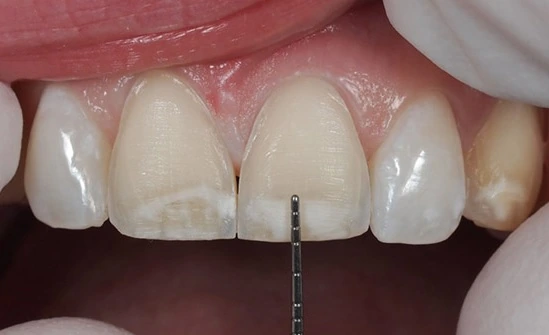
Before installation
After installing veneers
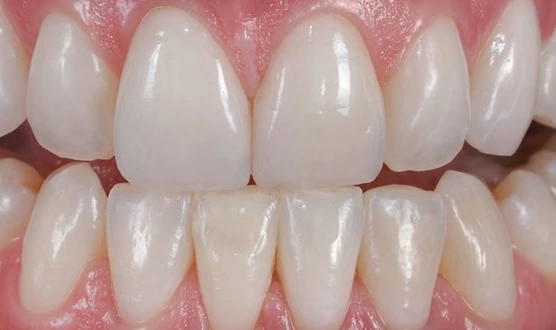
Can the lifespan of veneers be extended?
Undoubtedly, but for this it is important to adhere to a number of rules. First of all, you need to take care of the oral cavity. Between the plates and the enamel there is a zone where, with inappropriate care, food gets in and harmful bacteria multiply. For this reason, teeth need careful care. An oral irrigator can help in this matter. In addition, to avoid damage to the plates, refuse to take coloring and highly acidic products.
Also, veneers should not be loaded, that is, it is necessary to exclude crackers and other excessively hard foods from the diet so as not to damage the restoration of the teeth.
What type of veneers do you prefer?
Of course, to the ceramic appearance of veneers, they best convey the natural shade, as well as the texture of the teeth. In addition, due to the creation of such veneers in the laboratory, they fit as closely as possible to the enamel, which is difficult to achieve with a composite veneer.
Dentists that install veneers in Kiev