
We invite you to familiarize yourself with the information from which you can learn:
- Proposed types of removable prosthetic structures, differences.
- The price for some types of prosthesis installation in Kyiv.
Currently, dentistry offers its patients two main types of prostheses for teeth:
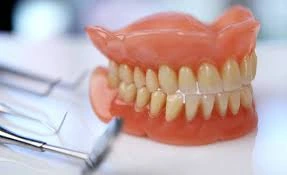
1. Removable. They can be taken off and put on by yourself. They are made to restore a large number of missing teeth in the dentition. Fastening is carried out on the gum, and in the presence of preserved natural teeth, the load is redistributed to the whole teeth. They are used when it is impossible to install another type of prosthesis.
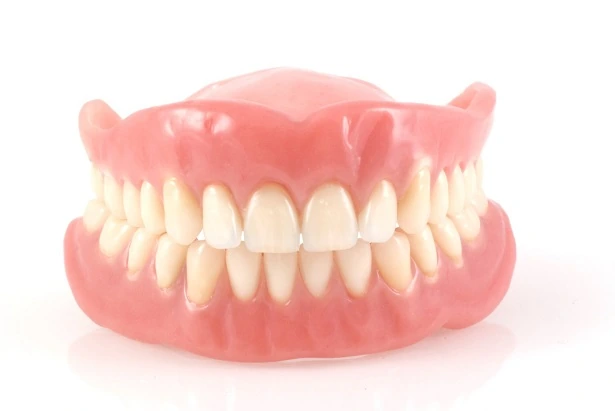
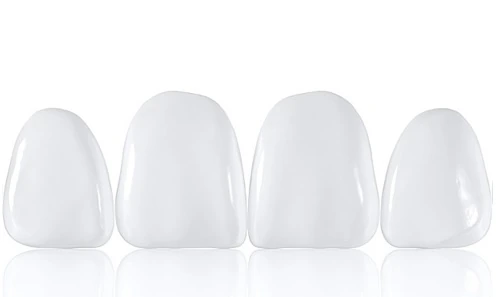
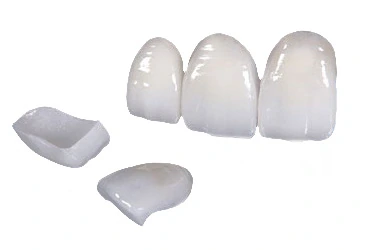
2. Non-removable. Fixed permanently, on the abutment teeth or implant. They are used to restore destroyed tissues, or in the absence of teeth. The procedure is performed using crowns, bridges, veneers, inlays.
Immediate prosthesis, which is a removable partial construction made of plastic, can be attributed to a separate category. It is used for temporary use after tooth extraction, or in another temporary case. The choice of installation option depends on the recommendations of specialists and the preferences of patients.
Indications for the installation of prostheses
The main indications for the installation of prostheses are the following:
- Strong abrasion of teeth with subsequent destruction. For this, veneers and crowns are used.
- Complete or partial absence of teeth. The type of prosthesis depends on the existing defect.
- Many defects in the dentition. Each person eventually experiences the appearance of defects in the teeth in large numbers.
Prosthetic options are recommended by the dentist, taking into account the condition of the oral cavity and other factors. Relative indications include unwillingness to process teeth for crowns in bridges, tooth mobility, which makes it impossible to use a lamellar view.
Varieties of removable dentures
In most clinics, orthopedic products are presented, which differ in prices, ease of use, service life, and are also conventionally divided into two main types, such as:
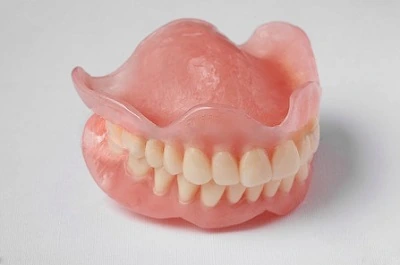
- Complete removable dentures. It is performed in case of complete absence of teeth. The gum (alveolar process) serves as a support for the attachment, and another part of the sky is affected in the upper part of the jaw. The complete removable construction is made of nylon or plastic. The fixation is very imperfect, which would be better done with clasps. Removable ones are conditionally removable, covering, which have better fixation due to the implantation of several micro-implants.
- Partial. They are used when there are one to several teeth in the jaw, preserved and used as a support. Material used: plastic, nylon, metal for the frame.
Differences in the materials used separate them into groups and, accordingly, the difference in price.
For a removable prosthesis, there are certain requirements, such as:
- reliable fixation system;
- no adverse effects on the mucosal tissue in the oral cavity;
- prevent the destruction of hard tissues, periodontal supporting teeth;
- isolation on the bony prominence;
- good polishing, no pore formation;
- aesthetics, hygiene.
Injuries to the frenulum, buccal bands are not allowed;
Removable plastic denture
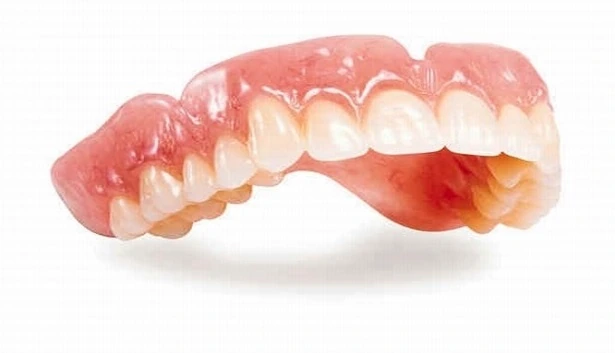
Removable plastic structures are made of acrylic plastic and are used in cases of partial or complete absence of teeth.
- Complete absence of teeth. In this case, the support is carried out on the gum, fixation is carried out by a closing valve, suction effect. With proper manufacture, it is held on the gum by means of a rarefied space formed between the mucosa and the structure itself. Such products are often referred to as suction cups.
- Partial absence of teeth involves the use of an acrylic construction with clasps made of hard quality wire coming from a plastic base covering the abutment teeth. Due to this, it is tightly fixed in the oral cavity.
- Absence of 1, 2 teeth. Recently, the plastic construction, which is called the “butterfly”, has been most in demand. The popularity of this product lies in the fact that there is no need to grind adjacent teeth during installation, install an implant for fastening and is very affordable for many people. It can be worn constantly and not feel discomfort.
Service life of a plastic prosthesis
Experts say that it is possible to use dental plastic products with good care for up to 5 years. But if you carry out high-quality care, preventive measures, and correct it in a timely manner at the dentist if necessary, then you can use more. And with accelerated atrophy of the jawbone, it is possible that the service life will be reduced to two and a half years. In any case, it depends on the individual characteristics of the oral cavity of patients.
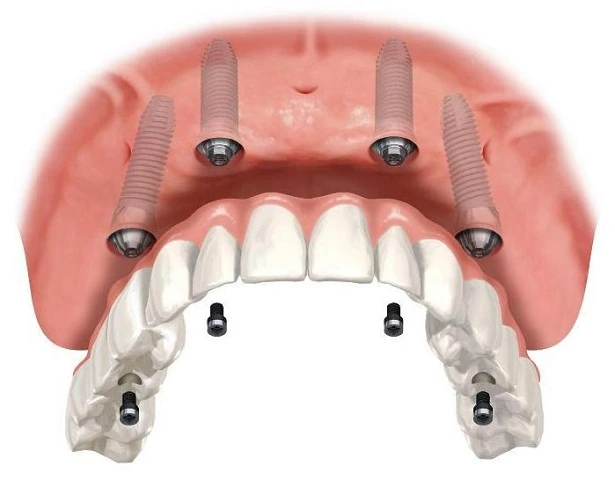
The prosthesis is removable on implants. Instructions for installation.
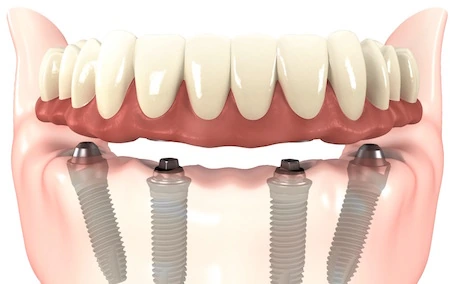
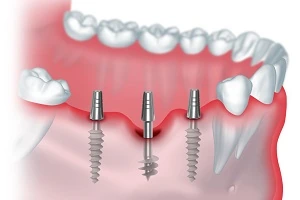
The technique of performing prosthetics on implants allows you to restore the dentition with lock fastening. Fixed type prostheses are represented by a bridge structure. Removable ones make up for the complete absence of teeth in the dentition. To do this, a locking mount is mounted, which holds the implants. The base contains part of the attachment components that connect the implants for a strong hold. Strong fixation allows the patient to remove the device on their own for oral hygiene. This type is best used in case of severe atrophy of the bone tissue, or the impossibility of installing a large number of implants.
Differences:
– Fastening. A removable prosthesis on implants is absolutely not visible during a conversation, since the fastening is carried out inside. An ordinary prosthesis, mainly with a metal lock, is noticeable when talking to others. When fixed, conventional designs can affect the splitting of a living tooth under heavy loads. On implants, the prosthesis is securely fixed.
– Action on natural teeth. When installing a removable prosthesis on implants, there is no need to grind neighboring living teeth, and there is no contact, which is not damaged under heavy loads.
The cost of removable dentures on implants is much higher compared to conventional ones. But their installation provides a long service life, reliability, strength, high comfort, minimal impact on natural teeth.
Nylon prosthesis. Benefits, cost.
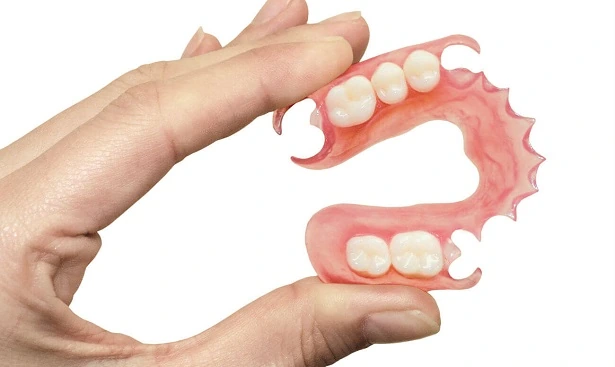
Nylon is an elastic polymer material that is soft and durable. It is great for removable dentures, which are used with partial or complete absence of teeth. It has been used in orthodontics relatively recently. Compared to plastic, nylon has high aesthetic properties. But the disadvantages include the lack of normal food intake, the constant feeling of the construction in the mouth, which is unbearable for some patients, and in the case of installation, repeated prosthetics are performed from another material. In any case, they do not cause allergies and have an average lifespan of up to five years.
Prices for nylon prostheses for teeth in Kiev dental clinics: full and partial nylon can vary in cost from 20 thousand UAH.
Bugel denture. Benefits and contraindications.
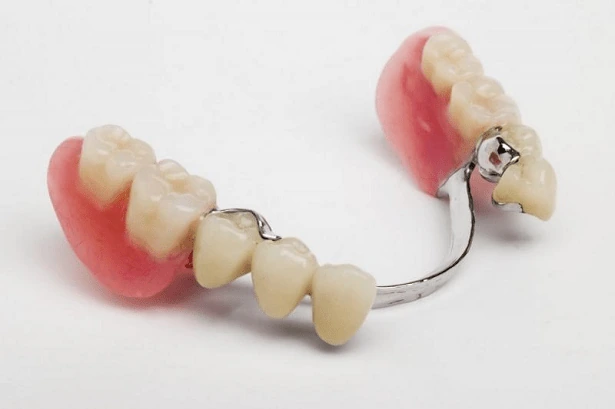
The clasp prosthetic design differs significantly from plastic or nylon prostheses. First of all, since, according to the name, borrowed from the German language, it means an arc and represents an arc-shaped structure. The basis of the prosthesis contains a metal frame, which made it possible to significantly reduce the size of the base in the patient’s oral cavity, in contrast to similar plastic fasteners. Such a prosthesis is considered comfortable when wearing, talking and eating. Such structures are fixed with the help of clasps, or attachments. A prosthesis with clasp fixation is reliable, comfortable, but has little aesthetics, since a metal clasp can be seen during a smile. Some designs may not be visible. Fixation with attachments (micro-locks) is performed with crowns, on which, together with the prosthesis, components of the micro-lock are built. Then, when putting on the prosthesis, the elements of the locks are connected and snapped into place. This type of attachment has excellent aesthetics and, thanks to this, the prosthesis is considered one of the best designs to date. But you should be aware of the presence of contraindications that are available in almost any prosthetics.
Installation of clasp prostheses is not possible in the presence of such conditions as:
- Atrophy of the alveolar process in a pronounced state.
- Pathology of periapical dental tissues, which are used for fixation of clasps.
- Deep bite, low teeth for support mounts.
- Acute inflammation in the mouth.
- Low bottom of the mouth.
- There are no supporting teeth and other problems that the dentist reveals during the examination.
Also, clasp prosthetics has temporary contraindications, in particular, the presence of acute diseases of the oral cavity, or in the body, during pregnancy, drug use, oncology, respiratory, cardiovascular diseases, as well as mental disorders.
The cost of a clasp prosthesis
The cost of a clasp prosthesis is higher in comparison with others and depends on the type of attachment, the materials used. The clinical condition of the patient plays an important role.
Only a specialist can determine which dentures will be better for a patient, taking into account the price. If it is impossible to prosthetize with a fixed prosthesis, then the best solution would be to install a clasp prosthesis. If the teeth in the oral cavity are completely missing, then a plastic prosthesis is perfect. When financial possibilities allow, the best solution is to install such prostheses using implants for strong fixation. Nylon prostheses are expensive and may not be suitable for all patients. Although they have high aesthetic performance.
Features of fixed dentures
Fixed dental products allow you to restore the anatomical dentition using such types as crowns, implants, and other types of systems. The types of fixed systems include mainly:
- single crown
- bridge
- implant.
Metal-ceramic is one of the most common materials used in prosthetic structures. It is often used in orthopedic dentistry, especially in cases where a damaged tooth cannot be restored. The cermet is installed with a powerful metal frame. The advantage of the material is strength, long service life, wear resistance. And also the advantages include a variety of color shades, which allows you to choose products for the natural dental tissues of patients.
It should be noted that ceramic prostheses can be used without metal and do not contain a metal frame. The convenience is that they fit snugly to the tooth, preventing the penetration of bacteria. In turn, with them you can not worry about the formation of caries. A perfect fit to the tooth is ensured by a shape that matches the shape of the tooth. A metal-free crown or ceramic implant has strength, aesthetics, no light refraction, which retains the excellent characteristics of tooth enamel, belongs to the elite, and therefore can be expensive for many patients.
Fixed systems provide for the installation of implants, which are initially implanted in the gum, then supplemented with a dental crown. Attachment of the crown in time is determined by the specialist, and, as a rule, it takes up to three weeks. Before installation, preparatory procedures are carried out, in particular, the gum is processed
a special shaper with the installation of a temporary one. A permanent structure is replaced after two or four months. The crown is made of ceramic, metal or a combination of these materials. In order for them to be used for a long time and properly, the procedure must be trusted only by proven specialists with experience and recommendations. Otherwise, problems may arise in the entire dentoalveolar system.
In any case, the installation of dentures provides for the recommendations of the doctor, as well as the wishes of the patient.
Prices for prostheses in Kyiv
The portal “101 Dentist” presents the best clinics in Kyiv, where you can perform the procedure for installing plastic products at affordable prices. Below are links to dentists that carry out prosthetics and prices.
Dentists that carry out prosthetics in Kiev
Compare prices for prosthetics in Kiev
Clinics offering this service
Dental clinic
Kyiv, str. Mykola Mikhnovsky, 14-16, section 3.